
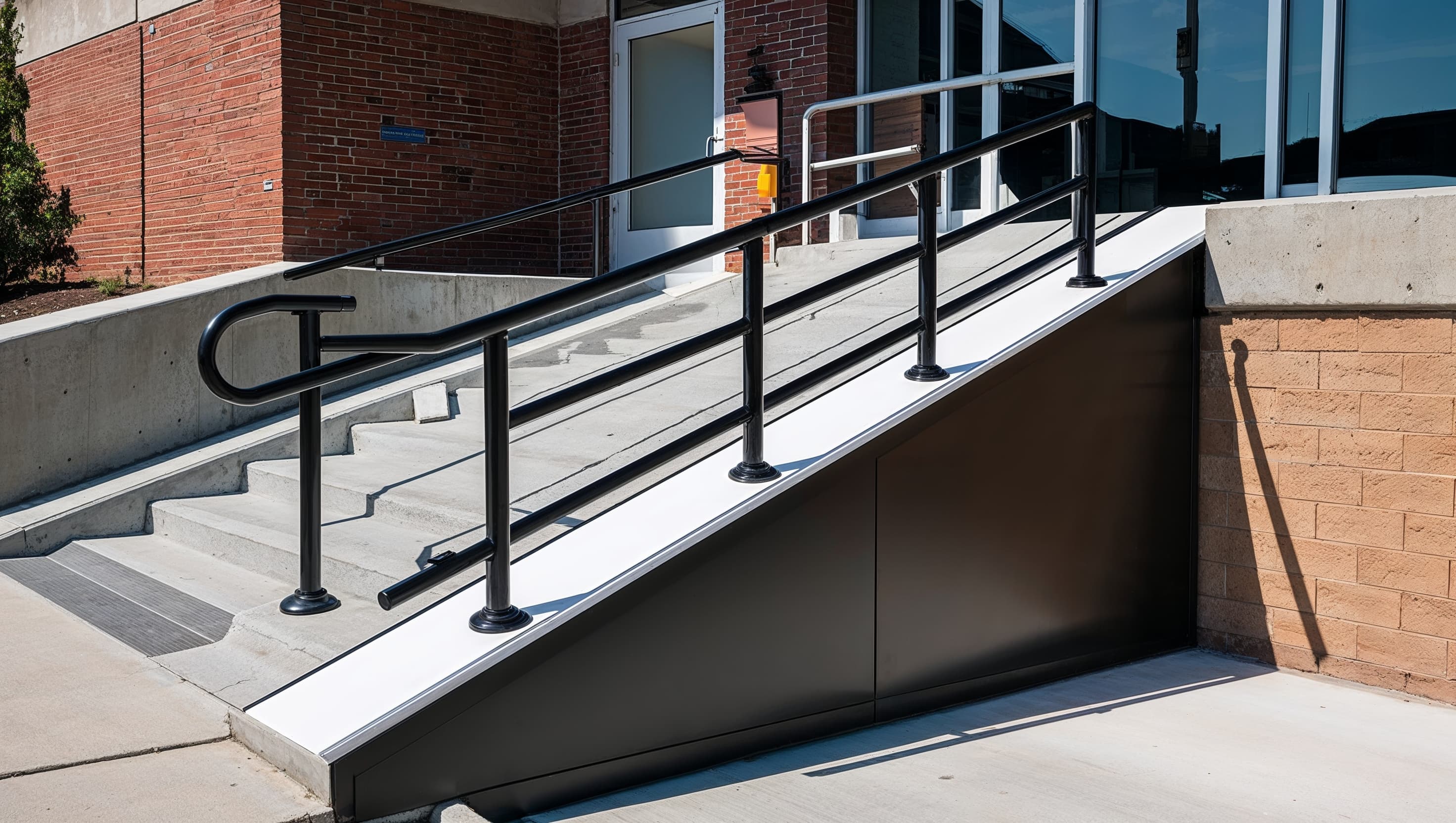
ADA Handrail Requirements Explained
Why ADA matters
The Americans with Disabilities Act sets the baseline for commercial handrails. Residential projects are not strictly required to follow ADA but many homeowners request it for aging-in-place.
Handrail height
34 inches to 38 inches measured vertically from the stair nosings or ramp surface to the top of the rail. 36 inches is the sweet spot most inspectors prefer.
Graspable profile
- Circular profile: 1-1/4 inch to 2 inch outside diameter.
- Non-circular: perimeter 4 to 6-1/4 inches with no dimension over 2-1/4 inches.
- 1-1/2 inch clear between rail and wall (or any obstruction).
Extensions
- Stairs: 12 inch horizontal extension at top, 12 inches plus one tread depth at bottom.
- Ramps: 12 inch extension at both top and bottom.
Extensions must return to wall, post, or floor to prevent clothing snags.
Continuous handrail
On stairs with multiple flights, handrails should be continuous through the run including landings. Breaks are only allowed at the main floor or where the flight changes direction.
Gripping surface clearance
2-1/4 inch minimum between the gripping surface and any wall or obstruction. This lets a full hand wrap around without scraping knuckles.
Material and finish
ADA does not specify material but does require a non-slip, durable surface. Powder-coated aluminum and 316 stainless steel both work.
Our ADA handrails
At AR Aluminum Railings we fabricate ADA-grade handrails for commercial entries, stairs, and ramps across NJ. Shop drawings reviewed by your AHJ are always included.